
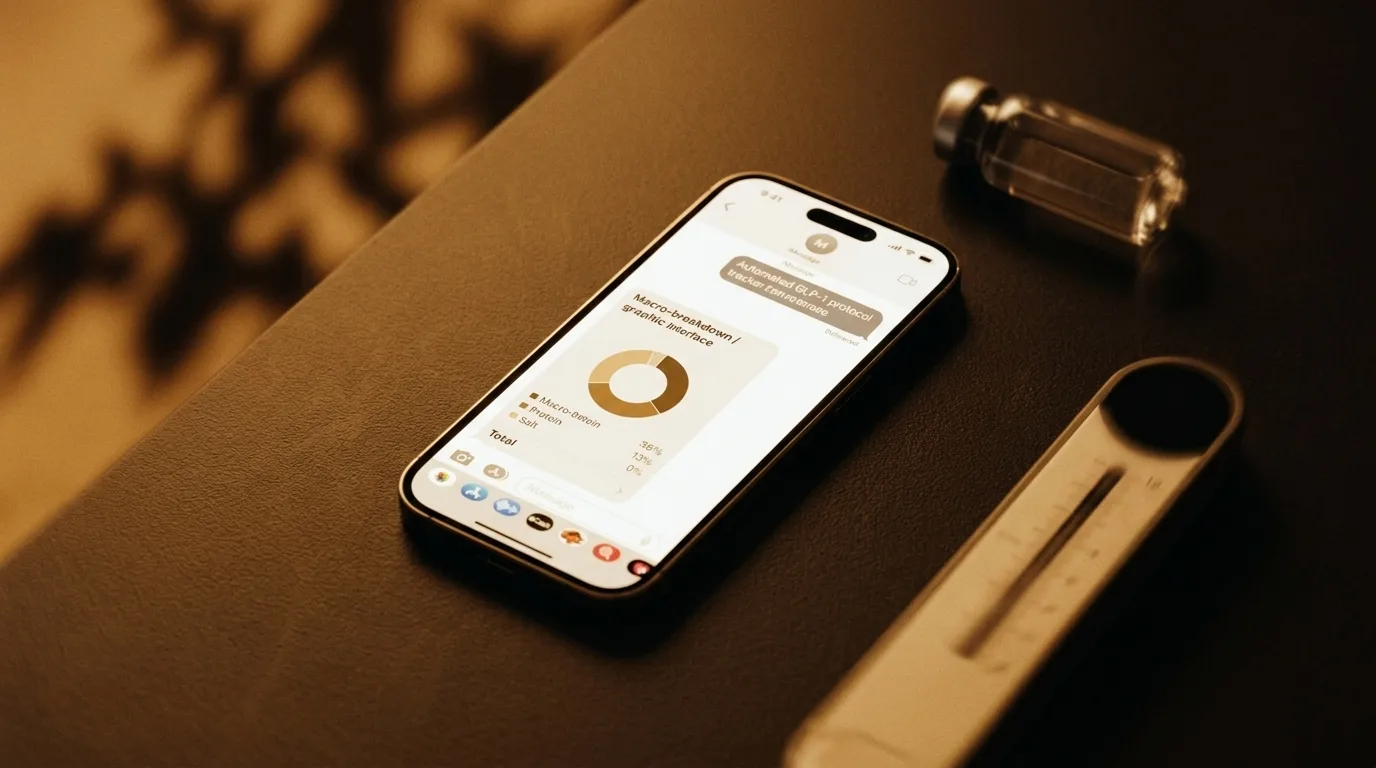
telehealth vs direct compounder
Navigating access to GLP-1 receptor agonists outside traditional commercial insurance coverage has split into two primary operational pathways: full-stack telehealth subscription platforms and direct relationships with licensed compounding pharmacies. For years, employer health plans and pharmacy benefit managers restricted coverage criteria, creating massive friction for individuals seeking metabolic optimization. In response, digital health startups built bundled portals that package physician consultations, digital intake forms, and home-delivered medication into a single recurring monthly fee. Meanwhile, seasoned healthmaxxers and biohackers have increasingly pursued direct relationships with compounding facilities, sourcing custom formulations through independent prescribers to gain granular control over dosing, peptide concentration, and ancillary compounding agents.
The shift toward alternative distribution channels is not a fringe phenomenon. Gallup’s 2026 polling found that brand-name products such as Ozempic, Wegovy, Mounjaro, and Zepbound account for 68% of current GLP-1 use, while 19% of current users are taking a compounded or custom-mixed version, and compounded users are far more likely to have switched away from a brand name than back to one, 35% versus 10%. Deciding between telehealth bundles and direct compounding sourcing comes down to a fundamental trade-off: paying a premium for frictionless onboarding versus managing clinical logistics independently to achieve greater protocol flexibility.
| Access Channel | Primary Advantage | Operational Trade-off | Best Suited For |
|---|---|---|---|
| Bundled Telehealth | Zero friction onboarding with built-in asynchronous prescribing | Inflexible fixed-dose tiers and recurring platform markup | Beginners wanting turnkey medication delivery |
| Direct 503A Compounder | Custom concentrations, transparent pricing, and flexible titration | Requires an independent licensed prescriber and manual coordination | Experienced biohackers managing multi-peptide protocols |
While bundled platforms remove administrative friction, they often restrict users to rigid titration schedules and pre-selected compounders. Direct sourcing unlocks custom peptide concentrations and tailored volumes, but it places the burden of finding an enlightened prescriber, managing refill schedules, and tracking biomarker responses squarely on the individual.
GLP-1 compounding source
Understanding the compounding ecosystem requires looking closely at federal regulations and facility classifications. In the United States, state-licensed 503A compounding pharmacies prepare customized medications for identified individual patients pursuant to valid prescriptions. These facilities differ from 503B outsourcing facilities, which manufacture larger batches under Current Good Manufacturing Practice regulations. During national drug shortages, compounders are permitted to prepare formulations of commercially available medications to preserve patient access.
The regulatory environment experienced a major shift when the U.S. Food and Drug Administration determined in February 2025 that the shortage of semaglutide injection products was resolved, granting only a short enforcement discretion window: 503A pharmacies could compound copies until April 22, 2025, and 503B outsourcing facilities until May 22, 2025. Once a shortage is resolved, neither 503A pharmacies nor 503B facilities may compound a product that is essentially a copy of a commercially available drug, though the order does not restrict compounding formulations that are not essentially a copy and are prepared to meet an individual patient need, such as a different dose or different inactive ingredients.
- 503A compounding facilities operate under state pharmacy board oversight and require individual patient prescriptions with documented clinical rationale.
- Shortage resolutions restrict compounders from mass-producing identical copies of commercial GLP-1s, shifting emphasis to personalized dosing adjustments.
- Vetted 503A compounders perform sterility testing, potency verification, and endotoxin screening for every batch.
- Unregulated grey-market peptide sources, often labeled as research chemicals, bypass all clinical quality control, presenting severe contamination and dosing risks.
Because of these legal boundaries, finding vetted compounding sources that adhere strictly to USP standards is critical. Sourcing from accredited 503A pharmacies ensures purity and precise potency, whereas turning to unregulated grey-market research peptide sellers introduces severe contamination, sub-potency, and sterility risks that compromise metabolic health.
subscription models and hidden fees
The financial architecture of GLP-1 telehealth platforms is frequently obscured by marketing headlines that decouple program fees from medication expenses. Telehealth providers broadly divide into two pricing structures: all-in bundled models and split subscription models. An all-in model bundles the clinician consultation, asynchronous messaging, prescription management, and home delivery of compounded peptides into a single monthly charge, typically ranging from $149 to $399 per month depending on the specific peptide and dose.
Conversely, split models charge an ongoing platform membership fee, frequently reaching $99 to $149 or even $199 per month, purely for access to the digital interface, administrative coordination, and prescriber messaging. In these programs, the cost of the medication is billed as an additional cash expense or routed through commercial insurance copays. When insurance denies coverage, patients in split programs can suddenly find themselves paying several hundred dollars on top of their mandatory monthly subscription fee.
| Model Type | Representative Platform Fee | Medication Cost Dynamic | Hidden Overhead Risks |
|---|---|---|---|
| All-In Bundle | $149 to $399 per month | Included in flat monthly rate | Steep price jumps as dosage titrates higher |
| Split Subscription | $99 to $199 per month | Billed separately as cash or copay | Medication cost cliffs if prior authorization fails |
| Direct 503A Sourcing | $0 monthly subscription | Direct pharmacy cash pricing | Upfront clinical visit and lab panel fees |
Direct compounder relationships eliminate the recurring platform subscription entirely. You pay an independent physician for an initial consultation and necessary metabolic lab work, and subsequent medication refills are paid directly to the 503A compounding pharmacy at true compounding acquisition cost. For individuals managing long-term protocols, bypassing a $149 monthly subscription fee yields substantial compounding savings over a multi-year timeframe.
the clinical support gap
While telehealth platforms excel at software-driven onboarding and logistics, they frequently leave a massive clinical support void in day-to-day execution. Most platforms rely on asynchronous text tickets answered by rotating staff clinicians who evaluate dose titration, but provide zero continuous physiological oversight. This leaves patients on active GLP-1 and peptide protocols navigating side effects, appetite suppression, and body composition changes in complete isolation.
The most critical consequence of this support gap is musculoskeletal degradation. In major clinical trials, up to 40% of total weight lost on GLP-1 receptor agonist therapy can come from lean soft tissue and skeletal muscle rather than adipose tissue when adequate nutritional and resistance training interventions are absent. Rapid down-regulation of appetite causes patients to drastically under-consume dietary protein and micronutrients, accelerating muscle wasting, depressing basal metabolic rate, and increasing long-term rebound risk.
- Lean soft tissue loss accounted for 26% to 40% of total weight reduction in recent incretin trials, including the STEP 1 and SURMOUNT-1 DXA subsets.
- Asynchronous telehealth portals rarely monitor daily macronutrient composition or protein thresholds.
- In a published case series of three patients who trained with resistance exercise 3 to 5 days per week and emphasized dietary protein at 1.6 to 2.3 g per kg of fat-free mass, two increased lean soft tissue and the third lost only 8.7% of total weight as lean soft tissue while on semaglutide or tirzepatide.
- Without continuous bio-data tracking, heart rate variability dips and recovery deficits go completely unnoticed by prescribing clinicians.
Preserving metabolic health requires maintaining adequate daily protein intake and consistent mechanical loading. When telehealth companies treat GLP-1s simply as an automated prescription pipeline without hands-on lifestyle telemetry, patients bear the entire burden of engineering their own diet, recovery, and strength protocols.
telehealth peptide protocol
For advanced healthmaxxers, managing a GLP-1 or peptide regimen is rarely a single-variable experiment. Optimizing cellular health, lipolysis, and muscle retention involves building a comprehensive telemetry stack. Rather than simply stepping on a bathroom scale once a week, longevity enthusiasts track real-time biological markers using continuous glucose monitors (CGMs), wearable bio-trackers, and periodic comprehensive blood panels.
Integrating these variables allows users to adjust dosage timing and lifestyle habits dynamically. For example, wearable telemetry capturing resting heart rate and sleep architecture can signal autonomic nervous system strain, prompting tactical adjustments in training volume or hydration strategies. Meanwhile, continuous glucose monitoring provides immediate visual feedback on glycemic variability and insulin sensitivity.
- Establish baseline metabolic biomarkers including fasting insulin, HbA1c, lipid subfractions, and full hormone panels.
- Deploy continuous biometric tracking using wearables like Apple Health, WHOOP, or Oura to monitor heart rate variability (HRV) and recovery scores.
- Calibrate weekly injection timing around high-strain physical training and digestive recovery windows.
- Implement daily micronutrient and electrolyte logging to counteract rapid fluid shifts and gastrointestinal slowdown.
- Schedule periodic DEXA body composition scans to verify that fat loss is occurring without sacrificing skeletal muscle mass.
Executing this multi-variable stack flawlessly requires significant dedication. In an unassisted environment, reconciling data from multiple independent hardware devices and manual spreadsheets creates massive friction, turning personal health optimization into an exhausting administrative task.
tracking fatigue and decision overhead
The sheer cognitive overhead of manually running an advanced longevity stack is unsustainable for most high performers. Research demonstrates that the average individual makes tens of thousands of decisions daily, with hundreds centered around nutrition and food intake alone. When active peptide protocols, appetite fluctuations, and workout schedules are layered on top, decision fatigue sets in rapidly.
Tracking macros in manual logging apps, checking recovery telemetry across disparate dashboards, and calculating daily protein deficits feels like managing a second full-time job. When willpower is depleted by late afternoon, individuals often default to convenience choices or skip training sessions entirely, failing to hit the biological targets needed to protect their lean mass.
- Manual macro logging creates severe friction, causing users to abandon nutritional tracking within weeks.
- Siloed dashboards force users to toggle between wearable metrics, calorie trackers, and clinic messaging portals.
- Willpower-dependent tracking systems fail because decision fatigue degrades adherence over time.
- Automated data aggregation replaces subjective guesswork with objective, real-time physiological insights.
Relying on willpower to maintain complex protocols is a fundamental design flaw. The solution is not more discipline or another complex dashboard; it is transitioning from manual tracking to conversational health automation that takes action and handles the analytical heavy lifting proactively.
closing the execution gap
This is the gap miora was built to close: an intelligent, automated concierge layer that sits directly on top of whichever GLP-1 access channel you choose. Whether you source your medication through a bundled telehealth service or directly from a licensed 503A compounding pharmacy, it provides the continuous daily guidance and biological monitoring that prescribing clinics fail to deliver.
Operating natively through iMessage and RCS, the layer integrates with Apple Health, WHOOP, and Oura to ingest your real-time physiological telemetry. Instead of navigating noisy dashboards or manually entering calories, you can simply text meal photos for automated nutritional analysis, receive proactive prompts to hit your daily protein targets, and get intelligent adjustments to your workout intensity based on your recovery scores and injection day curves.
- Native iMessage and RCS interface eliminates the friction of downloading and opening separate tracking apps.
- Seamless wearable integration pulls HRV, sleep stages, and activity strain from Apple Health and WHOOP.
- Automated photo meal logging accurately estimates protein and caloric density without tedious manual entry.
- Dedicated concierge specialists and intelligent agents provide personalized protocol support to protect muscle, energy, and drive.
By connecting fragmented biometric data with proactive conversational intelligence, this approach bridges the gap between medication access and total health optimization. You focus on thriving while the automation handles the heavy lifting behind the scenes.