GHK-Cu vs Generic Copper
The skincare aisle is saturated with blue-tinted serums claiming the power of copper. For healthmaxxers and biohackers optimizing skin architecture, understanding the molecular difference between authentic GHK-Cu and generic copper compounds is essential. Generic formulations frequently utilize basic copper salts like copper gluconate or copper sulfate, or loosely complexed synthetic peptide blends. These ingredients lend a cosmetic blue hue to a bottle, but they lack the biological signaling machinery required for deep dermal remodeling.
Authentic GHK-Cu is an exact physiological complex: the tripeptide glycyl-L-histidyl-L-lysine chelated specifically to a divalent copper ion (Cu2+). First isolated from human plasma by Loren Pickart in 1973, this precise three-amino-acid sequence possesses a high-affinity binding pocket that coordinates copper in a stable, square-planar pyramid configuration. Without that specific sequence, copper ions cannot selectively bind surface receptors on dermal fibroblasts or regulate gene expression in human tissue.
The Structural Divide in Bioactive Delivery
When a generic formulation uses basic copper PCA or mineral salts, the copper remains unshielded and biologically non-targeted. Free copper ions can easily precipitate or catalyze oxidative reactions in the stratum corneum rather than driving regeneration. Authentic GHK-Cu silences the free-radical oxidative potential of copper while simultaneously utilizing the tripeptide chain as a biological key to access cellular pathways.
| Property | Authentic GHK-Cu Tripeptide | Generic Copper Mineral Formulations |
|---|---|---|
| Molecular Identity | Glycyl-L-histidyl-L-lysine bound to Cu(II) | Copper gluconate, copper PCA, or copper sulfate |
| Binding Affinity | Exceptional coordination (log10 = 16.44) | Weak or ionic association |
| Cellular Mechanism | Direct receptor interaction and gene modulation | Superficial hydration and non-specific mineral delivery |
| Gene Regulation | Up- and downregulates at least 4,000 human genes | No proven genomic signaling |
Investing in a sophisticated GHK-Cu skin protocol requires looking past cosmetic marketing. If a product does not specify Copper Tripeptide-1 or authentic GHK-Cu at verified concentrations, it is simply delivering trace minerals to the skin surface without initiating the cellular cascade necessary for true structural enhancement.
GHK-Cu Peptide Skin
The structural integrity of human skin degrades steadily across the lifespan. In young individuals, high endogenous levels of GHK-Cu maintain robust extracellular matrix turnover, cellular replication, and barrier defense. However, human plasma levels of GHK drop precipitously from approximately 200 ng/mL at age 20 down to roughly 80 ng/mL by age 60. This steep decline directly correlates with reduced regenerative capacity, thinning dermis, and slower recovery from environmental UV damage.
For anyone running an aggressive softmaxxing protocol, exogenous GHK-Cu restores this critical signaling molecule to tissue beds. Rather than acting as a simple surface moisturizer, authentic GHK-Cu penetrates the epidermis to stimulate the basal layer of keratinocytes. Research demonstrates that GHK-Cu markedly upregulates epidermal stem cell markers, including integrins and p63, prompting basal cells to adopt a youthful cuboidal morphology and restoring regenerative potential.
Balancing Matrix Metalloproteinases and Avoiding Overload
A primary strength of GHK-Cu in skin remodeling is its bidirectional control over tissue architecture. Skin aging is not only a failure of collagen production; it is also driven by the accumulation of misfolded, cross-linked, and damaged matrix proteins. GHK-Cu balances this environment by regulating matrix metalloproteinases (MMP-1 and MMP-2) to break down damaged proteins while simultaneously elevating tissue inhibitors of metalloproteinases (TIMP-1 and TIMP-2) to prevent excessive tissue degradation.
- Regulates MMP-1 and MMP-2 activity to clear photo-damaged extracellular debris.
- Upregulates TIMP-1 and TIMP-2 to protect newly synthesized structural proteins from premature breakdown.
- Stimulates the small leucine-rich proteoglycan decorin to guide orderly collagen fibrillogenesis.
- Prevents the phenomenon known in biohacking circles as the copper uglies by maintaining enzymatic equilibrium when dosed within therapeutic ranges.
When applied properly in balanced anti-aging peptides protocols, GHK-Cu thickens the dermis, tightens loose tissue, and smooths fine surface irregularities without triggering the severe irritation or barrier breakdown often seen with aggressive retinoid cycles.
Copper Peptides Collagen
Collagen loss is the primary mechanical failure mode of facial aging. Type I and Type III collagen fibers form the tensile scaffold of the dermis, while Type IV and Type VII anchor the dermal-epidermal junction. Without active peptide signaling, fibroblast output declines steadily from early adulthood onward while degradation continues unchecked. GHK-Cu directly addresses this decline by stimulating fibroblast transcription machinery to synthesize new procollagen chains.
The clinical evidence supporting GHK-Cu’s collagen-stimulating potency outpaces many standard dermatological actives. In a controlled comparison evaluating collagen production through histological analysis of skin biopsies, GHK-Cu cream applied to thigh skin for 12 weeks improved collagen production in 70% of the women treated, in contrast to 50% treated with vitamin C cream and 40% treated with retinoic acid.
Lysyl Oxidase and Structural Cross-Linking
Producing collagen monomers is only half the battle; the newly formed tropocollagen molecules must be cross-linked into resilient fibrils to provide skin with mechanical firmness. This critical enzymatic step is catalyzed by lysyl oxidase (LOX), a copper-dependent amine oxidase. The divalent copper delivered by GHK-Cu acts as an obligatory cofactor for LOX, enabling the covalent cross-linking of lysine residues in collagen and elastin networks.
| Topical Active | Share of Treated Women Showing Improved Collagen (Biopsy) | Primary Cellular Mechanism | Skin Tolerance Profile |
|---|---|---|---|
| GHK-Cu Tripeptide | 70% of the GHK-Cu group | LOX cofactor activation and gene-level procollagen upregulation | High tolerability with anti-inflammatory support |
| Vitamin C (L-Ascorbic Acid) | 50% of the vitamin C group | Prolyl and lysyl hydroxylase cofactor | Potential irritation and oxidative instability |
| Retinoic Acid (Tretinoin) | 40% of the retinoic acid group | Retinoic acid receptor (RAR) genomic activation | Frequent erythema, peeling, and barrier disruption |
By simultaneously accelerating procollagen production and facilitating enzymatic cross-linking, GHK-Cu restores mechanical tension to lax facial skin, creating a visibly denser dermis over consistent treatment cycles.
Dermal Penetration and Fibroblast Activation
The primary bottleneck in any topical peptide routine is the stratum corneum. Human skin evolved as a hydrophobic barrier designed specifically to keep foreign molecules out. Under the classical 500-Dalton molecular weight rule, larger protein complexes and bulky peptides cannot traverse the lipid matrix of the epidermis without specialized chemical or physical delivery systems.
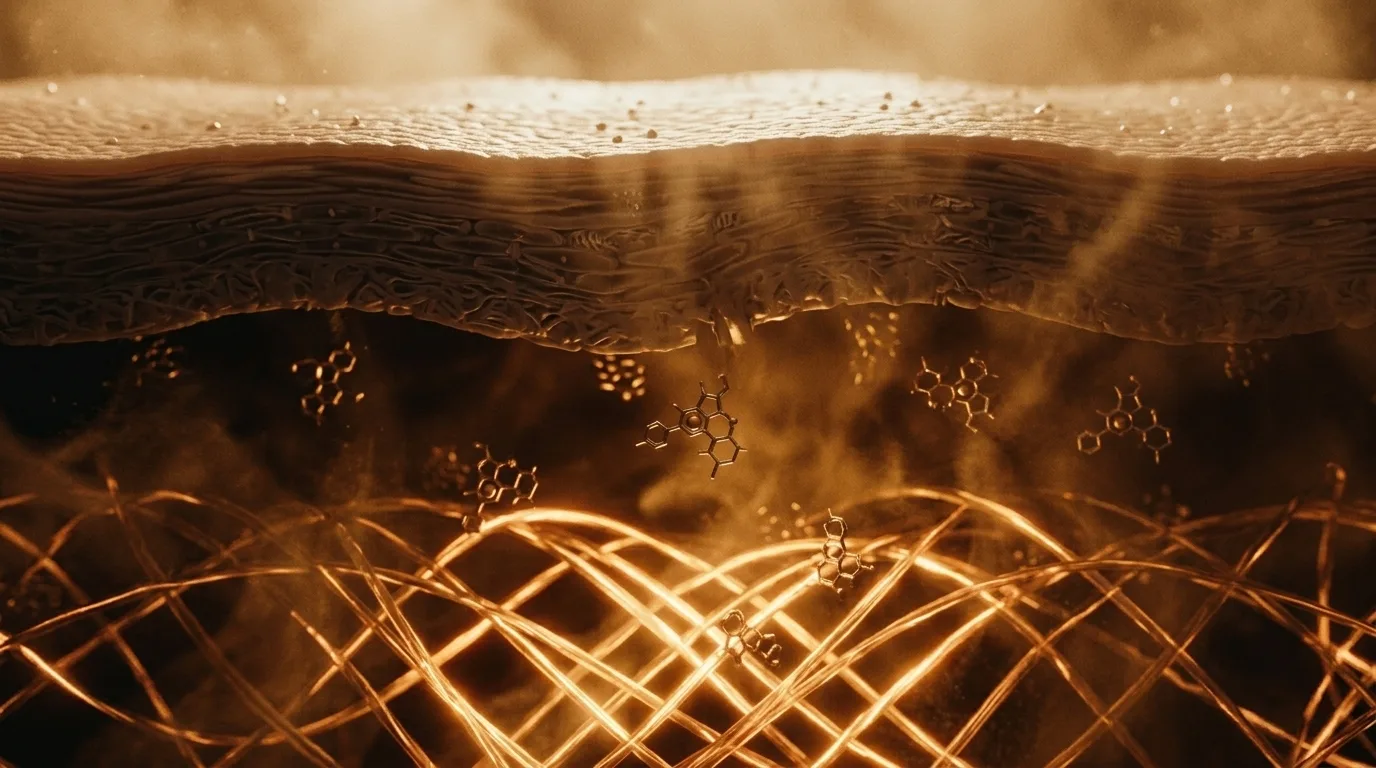
Authentic GHK-Cu possesses a compact molecular weight of approximately 404 Daltons when complexed with copper, allowing it to migrate through aqueous micro-channels in the stratum corneum in quantities sufficient to trigger downstream biological responses. In contrast, generic cosmetic formulations often utilize high-molecular-weight hydrolyzed copper proteins or bulky synthetic polymers that are far too large to cross the barrier. These massive complexes sit largely inactive on the skin’s surface, acting as expensive humectants while delivering minimal structural signaling to deeper dermal layers.
Activating the Deep Dermal Engine
Once GHK-Cu diffuses past the epidermal barrier into the extracellular matrix, it directly contacts dermal fibroblasts. Cultured fibroblast experiments demonstrate that GHK-Cu restores replicative vitality and increases the expression of basic fibroblast growth factor (bFGF), prompting dormant cells to synthesize new structural components.
- Penetrates the lipid bilayer due to its low molecular weight (~404 Da) and favorable distribution coefficients.
- Interacts with dermal fibroblasts to upregulate glycosaminoglycans, including dermatan sulfate and chondroitin sulfate.
- Stimulates basic fibroblast growth factor (bFGF) production to accelerate cellular repair.
- Restores replicative vitality and DNA repair mechanisms in cellular populations exposed to environmental stressors.
This targeted fibroblast activation is what separates authentic peptide biohacking from superficial cosmetic layering. Real dermal remodeling requires active molecules reaching target cells at biologically meaningful concentrations.
Tripeptide Affinity and Copper Transport
Copper is a double-edged biological sword. In its free, unbound ionic state, copper readily participates in Fenton-type reactions, generating hydroxyl free radicals that oxidize cellular lipids and degrade DNA. The human body never leaves copper unshielded; it is perpetually bound to carrier proteins and specialized chaperone molecules. This is why authentic GHK-Cu’s molecular geometry is a masterpiece of biochemical engineering.
The GHK tripeptide exhibits an extraordinary binding affinity for copper(II) ions, with an association constant of log10 = 16.44. For perspective, the primary copper transport protein in human blood, serum albumin, holds copper at its high-affinity transport site with a binding constant of log10 = 16.2. Because GHK’s affinity slightly exceeds that of albumin, the tripeptide can actively intercept and acquire Cu2+ ions from plasma transport sites, silencing their redox reactivity while delivering bioavailable copper directly to target tissue sites.
Precision Delivery Versus Trace Mineral Dumping
Generic copper skincare operates on the flawed assumption that any copper molecule will benefit the skin. In reality, pouring unchelated copper salts onto tissue can accelerate lipid peroxidation and trigger localized oxidative stress. Copper(II) redox activity is silenced once the ion is complexed with the GHK tripeptide, which is what allows nontoxic copper to be delivered into the cell for uptake and enzyme activation.
- Chelation stability constant of log10 = 16.44 prevents unwanted ion dissociation in tissue beds.
- Blocks Cu2+-dependent low-density lipoprotein (LDL) oxidation in vitro, where superoxide dismutase gave only about 20% protection.
- Inhibits iron release from ferritin by 87%, dramatically suppressing a primary trigger for lipid peroxidation and tissue inflammation.
- Delivers copper safely to intracellular cuproenzymes responsible for energy metabolism, cellular respiration, and tissue remodeling.
Treating copper as a precision delivery molecule rather than a generic additive is the core distinction between advanced peptide science and mainstream cosmetic formulas.
The Softmaxxing Execution Gap
In looksmaxxing and biohacking communities, information is never the bottleneck. High-performing individuals understand the theoretical science: they know the exact receptor dynamics of GHK-Cu, the optimal protein intake for collagen synthesis, the importance of deep slow-wave sleep for growth hormone pulses, and the necessity of broad-spectrum UV protection. Yet despite possessing deep technical knowledge, the vast majority fail to achieve their aesthetic and physical goals.
The failure point is the execution gap. Softmaxxing routines are fundamentally an exercise in unyielding daily compounding. Rebuilding the dermal matrix, upregulating collagen cross-linking, and achieving visible changes in skin density requires 3 to 6 months of uninterrupted daily consistency. Skipping applications, mismanaging peptide concentrations, or letting sleep and nutrition slip derails structural progress.
The Cognitive Burden of Manual Tracking
Managing a multi-variable protocol manually is an exhausting second full-time job. Juggling skincare schedules, tracking macronutrients, monitoring recovery scores across noisy dashboards, and remembering daily peptide timing quickly creates decision fatigue. When high-performers are forced to manage dozens of micro-decisions every day, willpower breaks down and consistency collapses.
- Skincare application routines fall out of sync with circadian skin permeability windows.
- Wearable recovery telemetry from devices like WHOOP, Oura, and Apple Watch sits isolated in data silos without driving daily action.
- Dietary protein and micronutrient targets slip due to meal planning paralysis and friction.
- A structured 30-day glow up or long-term softmaxxing cycle gets abandoned before the 90-day structural remodeling threshold is reached.
Relying on raw willpower to manage an intricate health stack is a fundamental design flaw. Closing the execution gap requires shifting from labor-intensive manual tracking to proactive automation.
Automating Your Peptide Protocol
Achieving peak aesthetic and biological performance should not demand hours of administrative overhead. The modern biohacking stack requires an agentic operating system that connects your physiological data, understands your protocols, and takes action proactively without cluttering your day with noisy dashboards or manual logs.
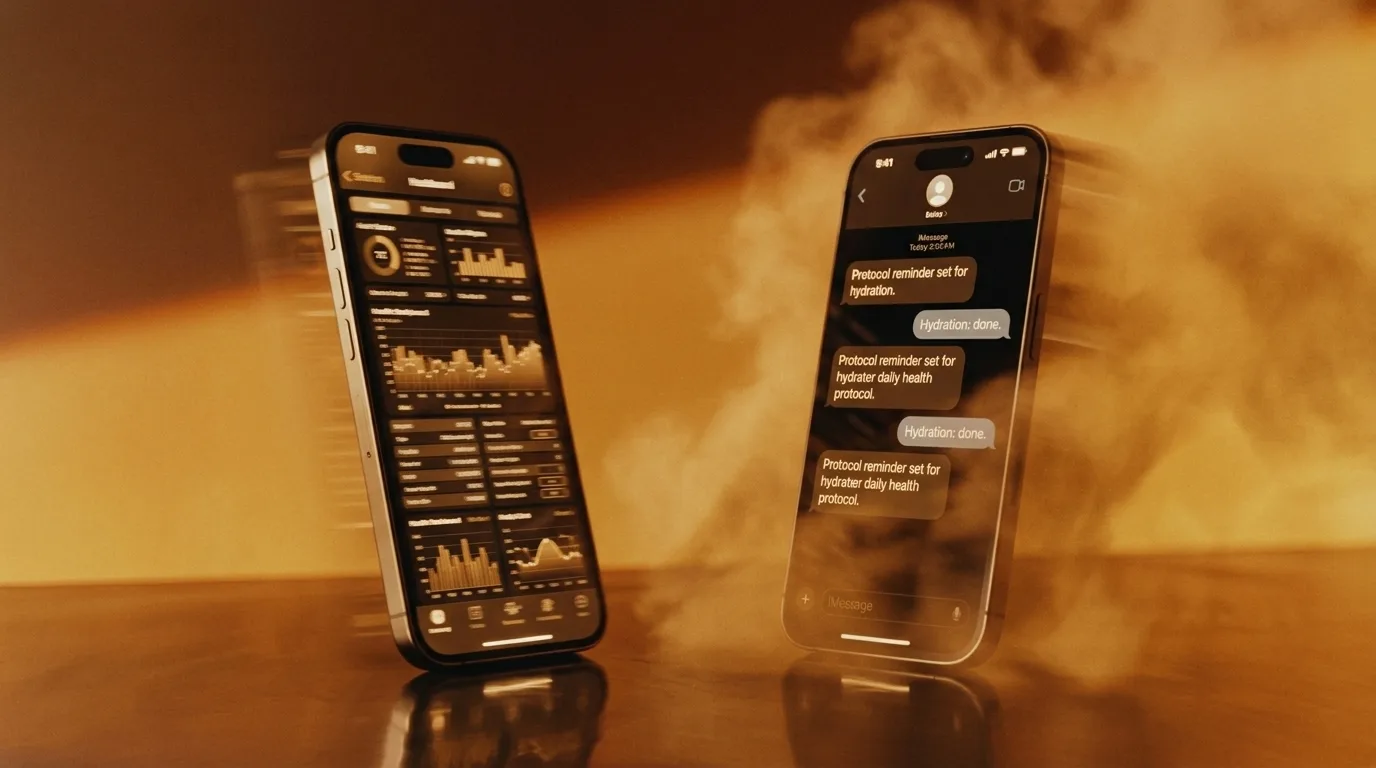
This is where a concierge support membership changes the picture. Instead of another rigid dashboard, the model pairs you with proactive AI health agents and access to a dedicated specialist via iMessage and WhatsApp, monitoring protocol adherence, interpreting biometric markers, and guiding you through active peptide regimens effortlessly.
Seamless Protocol Management and Bio-Telemetry
By integrating real-time telemetry from your wearables, including WHOOP, Oura, and Apple Health, the platform turns complex data into immediate daily execution. It tracks your recovery strain, flags protocol timing windows, and handles the heavy lifting of your health management so your focus remains entirely on performance and results.
- Proactive daily check-ins via conversational messaging to ensure uninterrupted protocol consistency.
- Continuous wearable integration that syncs recovery, sleep architecture, and autonomic strain with your active routines.
- Access to dedicated specialists to navigate dosing schedules, storage protocols, and compound synergy safely.
- A completely frictionless experience that eliminates decision fatigue and automates your entire wellness operating system.
Your biology deserves precision engineering, not cosmetic guesswork or manual tracking burnout. Try miora to automate your daily health protocols and keep your aesthetic and physical performance operating at the highest level.