Slow-Wave Sleep and the Nocturnal GH Pulse
For serious biohackers and healthmaxxers, deep rest is not merely passive downtime; it is the primary biological window for systemic tissue regeneration, neural recalibration, and endocrine balancing. Central to this overnight rebuilding process is the tight coupling between slow-wave sleep (stages 3 and 4 NREM) and the pulsatile secretion of endogenous growth hormone. During the early cycles of slow-wave sleep, high-amplitude delta waves trigger a synchronized neuroendocrine cascade that generates the largest hormonal surge of the 24-hour cycle.
In healthy adult men, roughly 70% of the growth hormone pulses released during sleep coincide with slow-wave sleep, and the amount of hormone secreted in those pulses tracks the concurrent amount of slow-wave sleep. This nocturnal surge acts as an anabolic catalyst, driving cellular protein synthesis, mobilizing fatty acids for repair processes, and supporting central nervous system recovery. When your slow-wave sleep windows are fragmented or compressed, this critical hormonal pulse is truncated, dragging down physical readiness and cognitive clarity.
The Age-Related Somatotropic Decline
As we advance past our twenties, natural endocrine output faces a well-documented downward trajectory. During the fourth decade of life (ages 30 to 40), the total amount of growth hormone secreted over a 24-hour span decreases by two- to threefold, and up to age 60 the share of deep N3 sleep falls linearly at roughly 2% per decade. This age-dependent decline leads to shallower sleep architecture, slower physical recovery, and reduced resilience against training strain.
Rather than overriding native endocrine control loops with exogenous hormones, modern biohackers deploy targeted secretagogues to signal the pituitary gland to restore youthful, pulsatile nighttime output. By reigniting the natural signaling that coordinates slow-wave sleep with endogenous peptide surges, we can rebuild recovery architecture from the ground up, as detailed in our guide on sleep and HGH.
| Sleep and Endocrine Parameter | Young Adult Baseline | Age-Related Decline (Ages 35-50+) | Optimization Objective |
|---|---|---|---|
| Nocturnal GH Output | About 70% of sleep GH pulses coincide with SWS | Two- to threefold drop in 24-hour GH output during the fourth decade | Restored natural secretory amplitude |
| Slow-Wave Sleep Duration | 10-25% of total sleep time | Marked contraction of deep sleep time with advancing age | Expanded delta wave duration and depth |
| Cellular Repair Dynamic | Rapid overnight tissue repair | Delayed muscle recovery and higher inflammation | Accelerated microtrauma recovery |
| Autonomic Recovery Shift | Sharp parasympathetic dominance | Prolonged sympathetic elevated tone | Accelerated nocturnal autonomic transition |
Sermorelin vs Ipamorelin Sleep Architecture
When selecting a peptide to optimize nocturnal recovery, understanding receptor mechanics and pharmacokinetic profiles is essential. Sermorelin and Ipamorelin represent two distinct approaches to stimulating endogenous growth hormone: one acts through direct mimicry of growth hormone-releasing hormone (GHRH), while the other engages the ghrelin receptor pathway.
Sermorelin is a synthetic peptide consisting of the first 29 amino acids of native GHRH, representing the functional fragment required to stimulate pituitary somatotrophs. Administered subcutaneously, Sermorelin exhibits a rapid elimination half-life on the order of 10 to 20 minutes due to swift enzymatic degradation. This brief pharmacokinetic profile produces an acute, physiologic pulse of growth hormone that closely replicates natural hypothalamic signaling. In a prospective study of once-nightly Sermorelin injections in healthy elderly men, treatment augmented the duration of rhythmic growth hormone release without pushing serum levels above physiologic norms.
Ipamorelin and Selective Receptor Signaling
Ipamorelin is a synthetic pentapeptide that functions as a selective agonist of the growth hormone secretagogue receptor (GHSR-1a), also known as the ghrelin receptor. Its clearance is fast enough to keep the signal pulsatile yet long enough to sustain a secretory burst across the early slow-wave sleep cycles rather than a single sharp spike.
What separates Ipamorelin from earlier ghrelin mimetics (such as GHRP-2 or GHRP-6) is its remarkable receptor selectivity. In the pharmacology study that introduced the compound, Ipamorelin did not release ACTH or cortisol at levels significantly different from those seen after GHRH stimulation, even at doses more than 200-fold above the dose producing half-maximal growth hormone release. This absence of cortisol stimulation is vital for sleep architecture: elevated nocturnal cortisol fragments delta sleep, raises heart rate, and triggers nocturnal awakenings. By avoiding cortisol spikes, Ipamorelin provides a clean endocrine signal that deepens restorative sleep stages.
| Compound Characteristic | Sermorelin | Ipamorelin |
|---|---|---|
| Target Receptor | Pituitary GHRH Receptor | GHSR-1a (Ghrelin Receptor) |
| Circulatory Half-Life | 10-20 minutes | 1.5-2.5 hours |
| Effect on Cortisol / ACTH | Negligible elevation | No significant increase |
| Pulse Shape and Timing | Sharp, transient physiological burst | Broader, sustained secretory peak |
| Primary Sleep Impact | Promotes initial sleep onset and stage entry | Sustains deeper delta sleep phases |
CJC-1295 HRV Recovery Telemetry
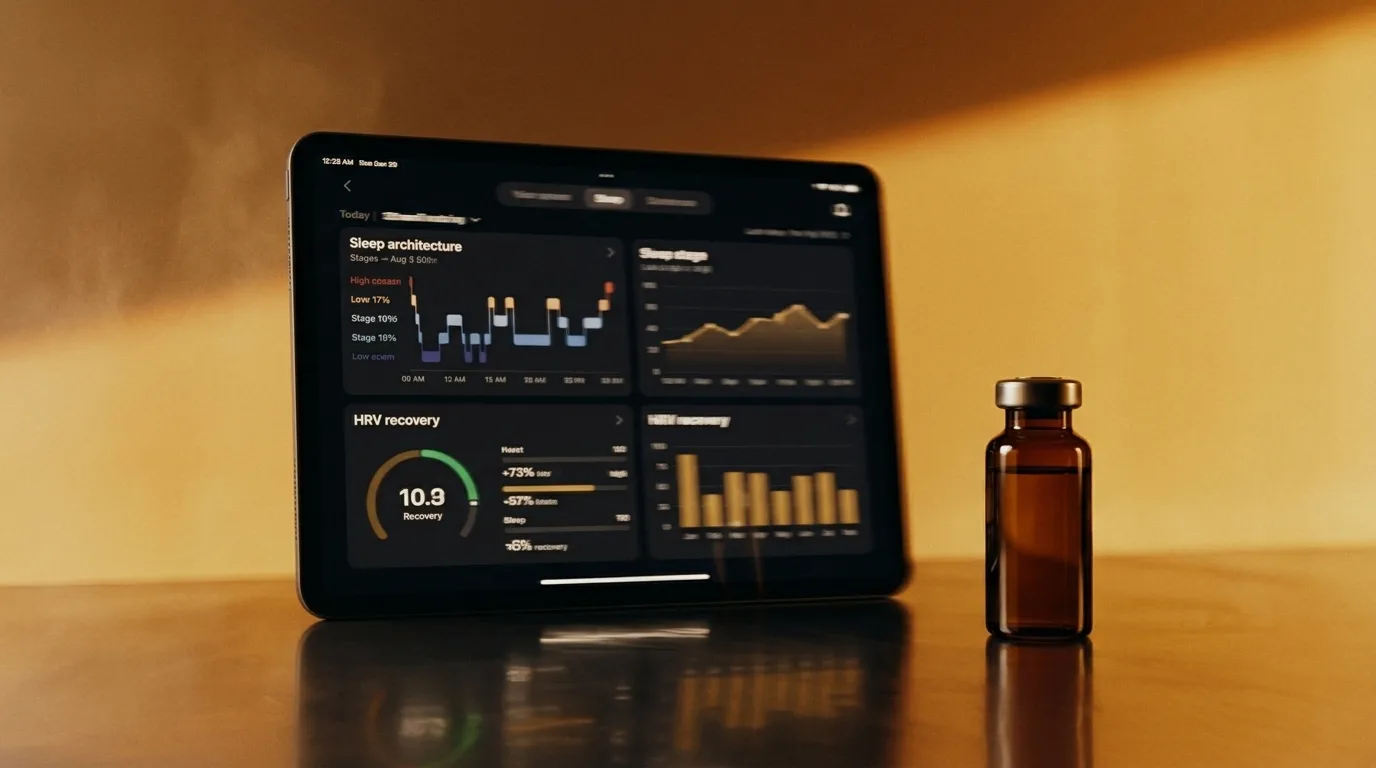
For biohackers monitoring autonomic telemetry, Heart Rate Variability (HRV) serves as the definitive biomarker of recovery readiness. A higher HRV indicates robust parasympathetic vagal tone, reflecting an autonomic nervous system that has transitioned out of fight-or-flight strain into deep restorative equilibrium. CJC-1295 plays a specialized role in reinforcing this parasympathetic recovery state.
CJC-1295 without DAC (frequently designated as Modified GRF 1-29) is an engineered GHRH analogue with four amino acid substitutions that protect it from rapid blood cleavage. In human trials of the long-acting CJC-1295 analogue, single subcutaneous injections produced dose-dependent increases in mean plasma growth hormone and IGF-I levels in healthy adults. This sustained signaling reinforces cellular repair mechanisms, accelerates glycogen replenishment, and mitigates systemic tissue inflammation.
Translating Endocrine Stability into Morning Readiness
When cellular recovery demands are met efficiently during the first half of the night, the sympathetic nervous system downregulates earlier. Wearable sensors capture this physiological transition as a faster drop in resting heart rate and a noticeable upward deflection in morning HRV metrics like RMSSD (root mean square of successive differences). Poor sleep quality measurably erodes recovery capacity; stabilizing nocturnal endocrine signaling counteracts this deficit.
- Elevated RMSSD baselines indicating lower cumulative sympathetic stress across weekly training blocks
- Earlier nocturnal resting heart rate stabilization, allowing the cardiovascular system to spend more hours in low-strain states
- Improved slow-wave continuity that reduces micro-arousals and stabilizes autonomic recovery curves
- Faster musculoskeletal tissue repair that mitigates delayed-onset muscle soreness and boosts training readiness
The CJC-1295 and Ipamorelin Stack Advantage
While monotherapy protocols like standalone Sermorelin provide measurable improvements in growth hormone output, the modern biohacking standard has shifted decisively toward dual-pathway stacking. Combining CJC-1295 without DAC with Ipamorelin creates a powerful synergistic dynamic that single-compound regimens cannot replicate.
The biological logic lies in the independent receptor mechanisms. Pituitary somatotrophs are regulated via two distinct activating pathways: the GHRH receptor, which stimulates adenylate cyclase and intracellular cAMP production, and the GHSR-1a ghrelin receptor, which mobilizes intracellular calcium via phospholipase C signaling. When both pathways are activated simultaneously, the intracellular signaling cascades compound synergistically.
Synergistic Secretory Amplitude
In endocrine research assessing combined secretagogue stimulation, co-administering a GHRH analog alongside a ghrelin receptor agonist produced a 54-fold increase in pulsatile growth hormone secretion compared to controls, substantially exceeding the roughly 20-fold response generated by GHRH stimulation alone. Furthermore, secretagogue treatment shortened the time to maximal hormone secretion by a median of 43%, delivering a rapid, high-amplitude pulse timed with initial sleep cycles.
This dual-pathway synergy deepens slow-wave sleep more reliably than Sermorelin alone. By pairing a stable GHRH signal with an ultra-clean ghrelin receptor agonist, biohackers achieve a robust nocturnal surge while completely avoiding cortisol spikes or prolactin elevation, as explored in our comprehensive Ipamorelin CJC 1295 stack breakdown.
| Protocol Configuration | Signaling Mechanism | Secretory Pulse Amplitude | Sleep Architecture Depth |
|---|---|---|---|
| Sermorelin Monotherapy | Single pathway (GHRH receptor only) | Modest, physiological pulse | Mild expansion of initial slow-wave cycle |
| Ipamorelin Monotherapy | Single pathway (GHSR-1a ghrelin receptor) | Moderate pulse without cortisol elevation | Clean slow-wave support with zero cortisol interference |
| CJC-1295 + Ipamorelin Stack | Dual pathway (simultaneous GHRH + GHSR-1a) | Supralinear synergy (up to 54-fold pulse amplification) | Deep, sustained delta wave stages and optimal parasympathetic recovery |
Decoding Wearable Sleep Metrics
Subjective impressions of sleep quality can be deceiving. When running a secretagogue protocol, verifying efficacy requires correlating your regimen directly with quantitative biometric telemetry. High-precision consumer wearables like WHOOP, Oura Ring, and Apple Health provide continuous streams of physiological data that reveal exactly how your body is responding.
Tracking biometric changes requires establishing a solid two-week baseline prior to protocol initiation. Once the protocol begins, biohackers should monitor four primary variables to validate cellular repair and autonomic recovery, integrating these findings into recovery-based workout planning:
- Slow-Wave Sleep Duration: Look for an increase in total deep sleep minutes, particularly during the first two sleep cycles of the night, reflecting enhanced delta power
- Resting Heart Rate (RHR) Dip Curve: Track the nocturnal heart rate graph to verify a hammock-shaped curve where heart rate reaches its lowest nadir during the first half of the night rather than right before waking
- Heart Rate Variability (HRV): Monitor 7-day rolling RMSSD averages for an upward baseline shift, indicating improved autonomic balance and faster central nervous system recovery
- Sleep Latency and Continuity: Ensure that time-to-sleep remains under 20 minutes and nocturnal micro-awakenings decline, confirming the absence of unwanted cortisol activation
If your wearable data reveals elevated nocturnal resting heart rate or disrupted REM stages, it usually indicates a protocol variable is off, such as dosing too close to a high-carbohydrate meal or improper peptide reconstitution.
The Optimal Peptide Sleep Protocol
Executing a secretagogue protocol effectively requires strict attention to administration timing and metabolic context. Even the purest peptide stack will fail to deliver recovery benefits if administered during an unfavorable endocrine state.
The golden rule of secretagogue administration is maintaining a strict fasted window before dosing. Subcutaneous administration should occur 30 to 60 minutes before lights out, and at least 2 hours after your final meal. Ingesting carbohydrates or protein elevates circulating glucose and insulin levels, which triggers hypothalamic somatostatin release and directly inhibits pituitary growth hormone secretion. Elevated insulin blunts the secretagogue effect, squandering the pulse and disrupting intended sleep architecture.
Standard Administration Guidelines
- Fasting Window: Cease all caloric intake at least 2 to 3 hours prior to administration to ensure baseline insulin and blood glucose levels
- Timing Cadence: Administer the subcutaneous dose 30 to 60 minutes before planned sleep onset to align peak plasma concentration with your first slow-wave sleep cycle
- Hydration and Electrolytes: Maintain adequate hydration without excessive fluids immediately before bed to eliminate sleep-disrupting bathroom trips
- Cycling Schedule: Follow structured protocol cycling (such as 5 days on, 2 days off, or 8 to 12-week cycles) to maintain receptor sensitivity and prevent tachyphylaxis, tracking your schedule using a dedicated peptide injection schedule
- Consistent Sleep Hygiene: Keep sleep and wake times locked within a 30-minute window every day, as circadian regularity compounds the endocrine benefits of the protocol
By respecting the inhibitory role of somatostatin and maintaining consistent dosing logistics, you allow the synergistic CJC-1295 and Ipamorelin pulse to synchronize smoothly with your brain’s natural delta rhythms.
Automating Your Health Data
Optimizing longevity and peptide protocols shouldn’t feel like a second full-time job. Between managing fasting windows, calculating reconstitution math, logging injection times, and cross-referencing fragmented data across WHOOP, Oura, and Apple Health, health tracking often creates decision fatigue rather than clarity.
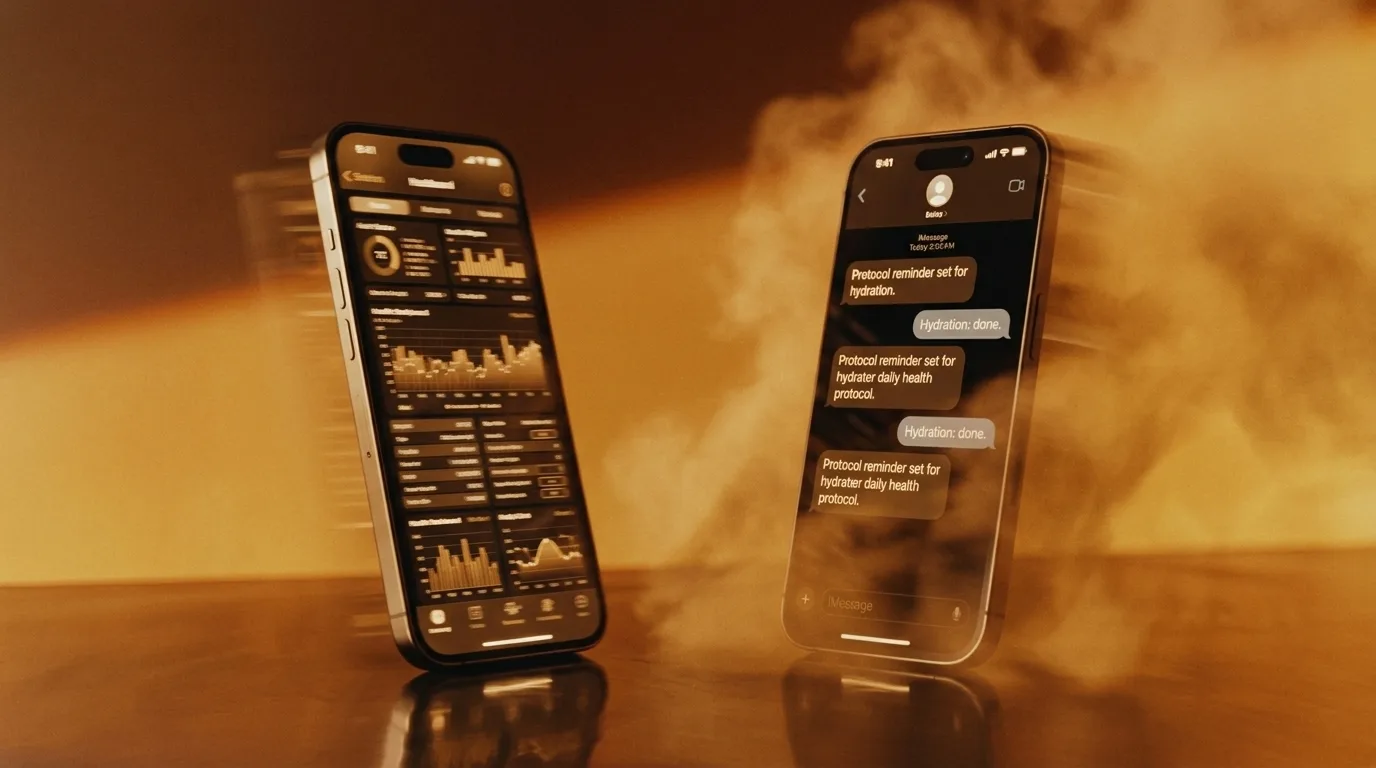
That is why we built miora. Operating natively as an agentic personal health assistant through iMessage and RCS, it eliminates the manual burden of modern biohacking. Instead of wrestling with static spreadsheets or noisy dashboards, the assistant monitors your wearable telemetry 24/7, detects baseline shifts in deep sleep and HRV, and proactively correlates your biometric recovery with your protocol execution.
For those running targeted peptide regimens, the Protocol membership provides personalized concierge guidance, daily protocol check-ins, and direct access to dedicated specialists. As the ecosystem evolves toward next-generation sleep optimization apps, the assistant takes action on your behalf, handling the logistical heavy lifting so you can stop tracking and start thriving.