Noom vs Cal AI vs agentic assistants
The evolution of digital nutrition tools reflects a continuous effort to solve one fundamental problem: maintaining dietary consistency without succumbing to daily friction. First-generation platforms relied on manual food logging, requiring users to weigh ingredients, search sprawling databases, and log every gram manually. Over time, digital health shifted toward psychology-based programs to change dietary mindsets, and more recently, toward computer-vision utilities that calculate calories from smartphone snapshots.
Today, modern health optimization demands more than passive data entry or daily psychology lessons. Biohackers, professionals, and individuals managing advanced metabolic routines are shifting from passive tracking to proactive automation. Comparing a behavioral program, a photo calorie counter, and an autonomous agent highlights three distinct philosophies in digital nutrition management.
Comparing Core Philosophies and System Workflows
| Dimension | Noom | Cal AI | Agentic assistant |
|---|---|---|---|
| Primary Mechanism | Cognitive behavioral therapy lessons and color-coded logging | Computer vision photo calorie estimation | Autonomous health agents and proactive workflow execution |
| User Effort | High: Daily reading, manual food search, weight logging | Moderate: Taking photos of every meal and reviewing macro outputs | Frictionless: Automated meal ordering, biometric adjustments, zero manual logging |
| Biometric Context | Limited: Step counts and basic activity data | None: Isolated meal snapshot analysis | Comprehensive: Bi-directional sync with WHOOP, Oura, and Apple Health telemetry |
| Interface | Native mobile application with structured lesson modules | Native mobile application camera interface | Conversational assistant operating natively inside iMessage and RCS |
| Action Orientation | Educational: Teaches psychological concepts for self-execution | Descriptive: Informs you of estimated calories after you eat | Autonomous: Adjusts protocols and orders macro-aligned meals ahead of time |
While Noom focuses on building mindfulness through daily curriculum and Cal AI speeds up logging via visual recognition, both platforms remain fundamentally descriptive. They record past actions and place the entire burden of meal planning, grocery selection, and schedule adjustment back on your shoulders. An agentic health assistant, by contrast, turns passive telemetry into proactive decisions and removes the willpower tax entirely.
Cal AI alternative
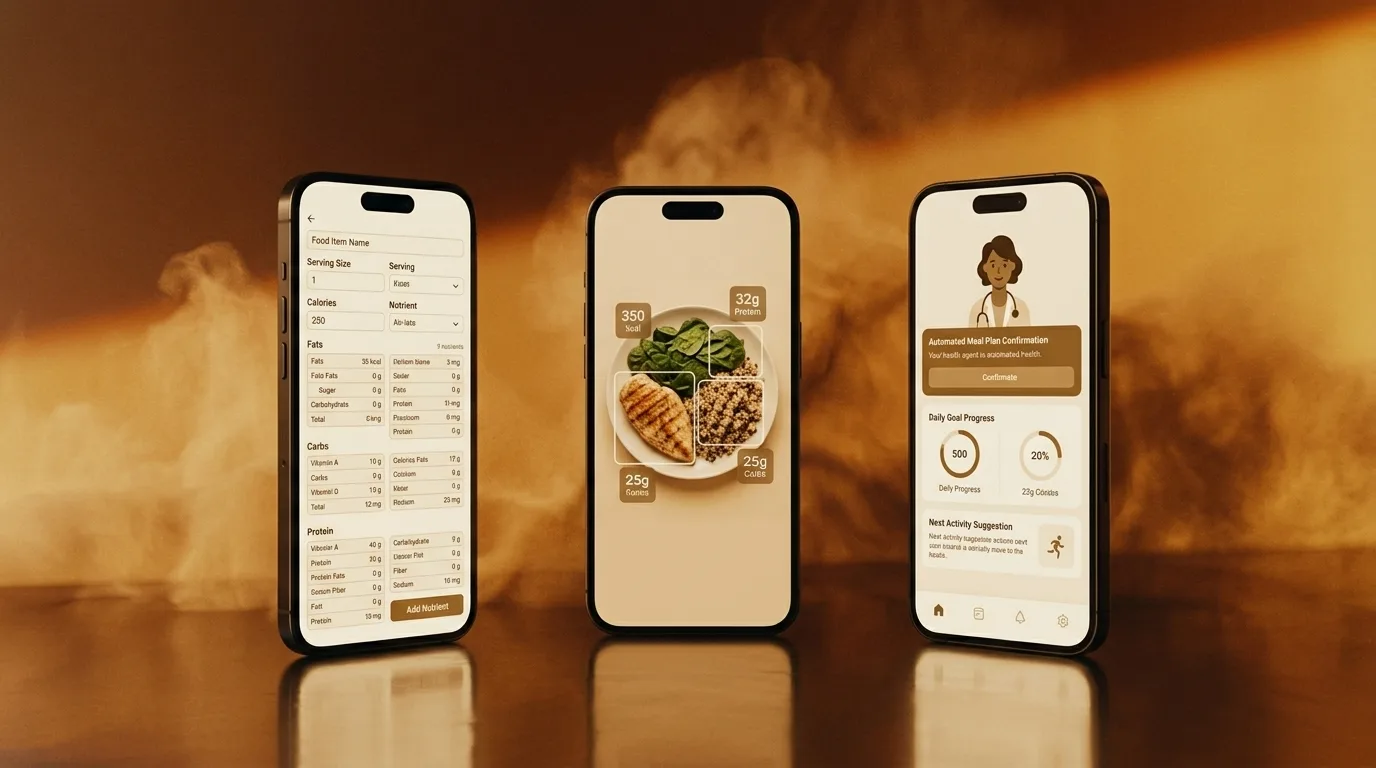
Cal AI gained significant traction by addressing the primary friction point of legacy trackers: the tedious process of searching text databases for every ingredient. By training deep neural networks on food photography datasets, photo logging tools allow users to snap an image of a plate to receive an immediate estimate of calories and macronutrients. For simple, single-ingredient foods like an apple or an unseasoned chicken breast, computer-vision models perform adequately.
However, photo-based nutritional analysis encounters severe technical boundaries when applied to real-world dining. Research evaluating AI-enabled food image recognition apps reveals that while basic item identification achieves reasonable accuracy, automatic energy estimation on complex, mixed dishes was inaccurate, with underestimations of 35% for eggs on toast with butter, 73% for the same dish in another app, and up to 76% for dishes such as beef pho and pearl milk tea. Visual sensors cannot detect hidden cooking oils, dressing emulsions, varying sodium concentrations, or internal ingredient densities through a two-dimensional photograph.
The Inherent Limitations of Photo-Only Tracking
- Optical Occlusion: Sauces, marinades, healthy fats, and hidden sugars remain invisible to camera lenses, leading to substantial caloric underestimation.
- Portion Volume Ambiguity: Single-angle smartphone photos struggle with depth perception, compounding volume errors across dense food items.
- Retroactive Logging Friction: Snapping photos requires remembering to photograph food before every meal, keeping the mental burden of tracking alive.
- Lack of Contextual Action: Learning that a lunch exceeded your carbohydrate limit provides no operational help for what to eat for dinner.
An agentic alternative to photo guessing bypasses visual estimation entirely by connecting directly with delivery logistics and nutritional databases. Instead of asking you to photograph a meal and wonder about margin of error, the system evaluates your remaining macronutrient targets for the day and automatically procures macro-aligned dishes through DoorDash integrations. You transition from estimating past mistakes to executing exact nutritional protocols.
Noom alternative
Noom approached the nutrition challenge from a clinical psychology framework, adapting cognitive behavioral therapy techniques to digital weight management. Its structured curriculum teaches users about caloric density using a traffic-light classification system, categorizing foods into green, yellow, and orange categories to encourage volume eating and habit formation.
The effectiveness of structured behavioral intervention is well documented. Clinical publication data indicates that 63% of active male participants on Noom achieved clinically significant weight loss over a 16-week intervention period. The program provides proven cognitive tools for understanding emotional eating, navigating social triggers, and restructuring personal health mindsets.
The Willpower Tax of Daily Behavioral Homework
- Daily Curriculum Demands: Users must dedicate 10 to 15 minutes every morning to read psychological articles and complete quizzes.
- Manual Color Logging: Every food item must be manually entered and categorized within the green-yellow-orange density matrix.
- App Dashboard Overload: Navigating distinct dashboards for logging, step tracking, water intake, and coach messaging creates cognitive fatigue.
- Willpower-Dependent Execution: Learning why you crave convenience food does not prepare or deliver a protein-dense meal when your schedule collapses.
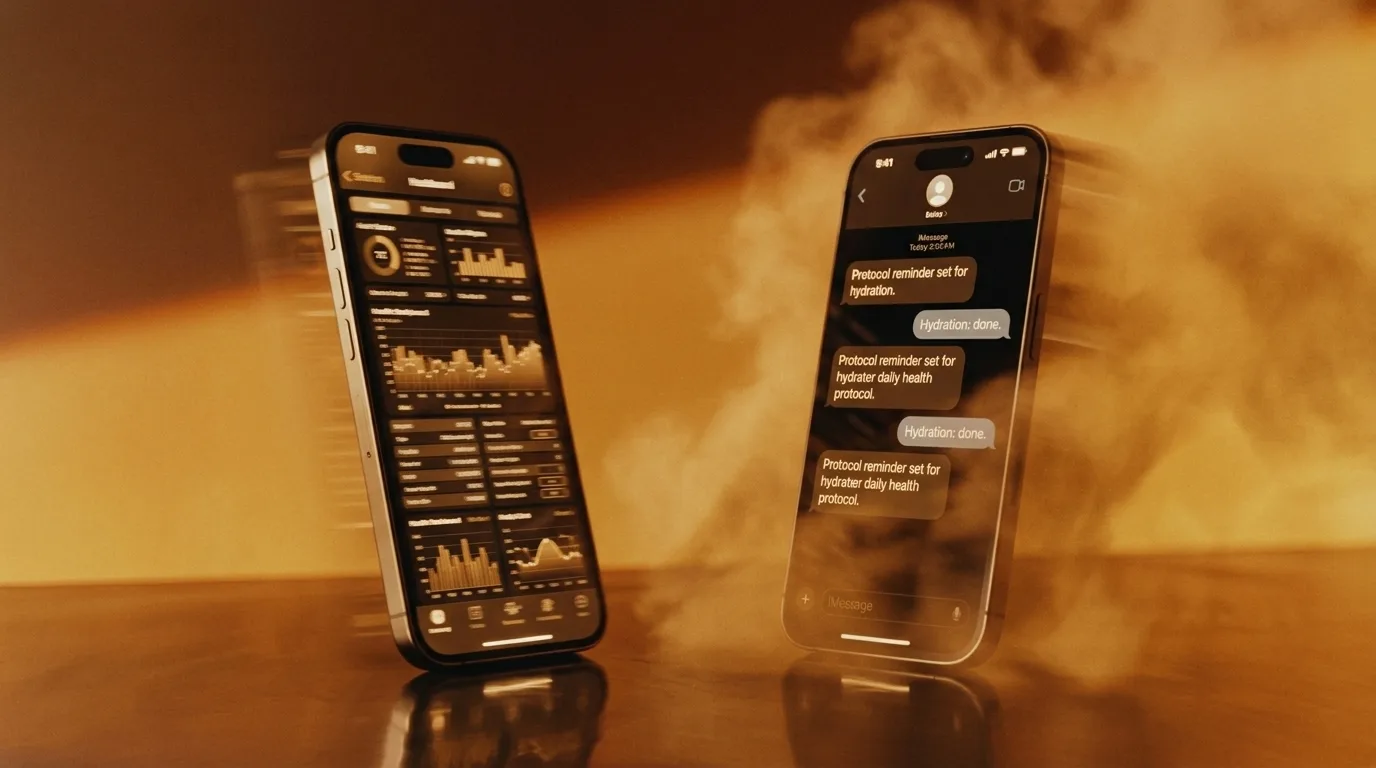
While education has value, high-performing individuals and biohackers often do not lack nutritional knowledge; they lack the time to execute it consistently amidst demanding professional schedules. An agentic assistant serves as a direct alternative by replacing daily homework with conversational automation. Operating natively inside iMessage and RCS, it requires no app navigation or manual journaling, acting instead as an executive concierge that handles logistics and keeps protocols intact without demanding continuous willpower.
photo calorie counter vs AI agent
The technical divide between a photo calorie counter and an autonomous AI health agent lies in the difference between passive telemetry collection and active workflow execution. A photo counter is a single-purpose optical tool designed to digitize food records. An agentic assistant is a connected intelligence layer capable of reasoning across multiple data streams to execute real-world tasks on your behalf.
Functional Disconnect: Logging the Past vs Driving the Future
| Capability | Photo Calorie Counter | Autonomous AI Health Agent |
|---|---|---|
| Operational Direction | Retrospective: Captures what you have already consumed | Prospective: Plans, schedules, and orders what you will consume next |
| Data Integration | Isolated camera feed without biological context | Multi-modal: Wearable strain, sleep quality, calendar schedules, and preferences |
| Execution Capability | Zero: Outputs static numbers on a mobile screen | Active: Places food delivery orders, books fitness classes, and adjusts schedules |
| Error Correction | Manual: Requires user to edit weight and ingredient estimates | Systemic: Dynamically recalibrates future meals based on daily biometric burn |
| User Interface | Cluttered mobile application screens and camera prompts | Zero-friction conversational messages in native messaging apps |
When a photo counter analyzes a meal, its job is finished the moment it writes a calorie total to a local database. If that meal leaves you 40 grams short on your daily protein floor, the photo tool leaves you to research, cook, or order a solution. An agentic system recognizes the protein deficit, reads your calendar to see an upcoming late meeting, and texts you a curated order confirmation for a high-protein dinner that arrives exactly when your workday finishes.
Decision fatigue and tracking apps
The primary failure mode of long-term nutritional protocols is rarely a lack of motivation; it is decision fatigue. Every day, the human brain allocates limited cognitive bandwidth to evaluating choices, managing stress, and executing tasks. In high-demand professional environments, mental reserves deplete rapidly as the day progresses.
Seminal research from Cornell University demonstrated that the average person makes over 200 food-related decisions every single day, while remaining consciously aware of only a small fraction of them. When you factor in meal timing, ingredient sourcing, portion sizing, macronutrient calculations, and preparation logistics, the mental load compounds significantly.
How Traditional Apps Compound Tracking Exhaustion
- Micro-Decision Accumulation: Choosing whether to log raw versus cooked weights, brand variants, or restaurant estimates drains focus.
- Post-Work Cognitive Depletion: By 7:00 PM, executive function is exhausted, driving individuals toward fast convenience foods rather than goal-aligned nutrition.
- Guilt-Induced Drop-Off: Missing a single meal entry creates tracking debt, leading to app avoidance and eventual protocol abandonment.
- The Second Job Burden: Managing three separate apps for food logging, wearable telemetry, and calendar scheduling turns health into administrative overhead.
Traditional tracking utilities unintentionally exacerbate this fatigue by demanding continuous user input. Every prompt to log, take a photo, or complete a lesson adds another decision to an overloaded brain. An automation-first system eliminates this friction by executing behind the scenes, allowing you to hit your physical and metabolic goals without spending daily cognitive energy.
Integrating wearables and recovery data
Nutrition cannot function effectively when isolated from physical strain, autonomic nervous system stress, and sleep architecture. A static caloric target calculated from a generic online formula fails to account for the dynamic physiological fluctuations of daily life. High cardiovascular strain, poor restorative sleep, and suppressed recovery demand immediate nutritional adjustments.
Wearable biometric sensors provide continuous physiological telemetry, including heart rate variability (HRV), resting heart rate, and energy expenditure estimates. A laboratory validation of six consumer devices, including Apple Watch, the Oura Ring and WHOOP, benchmarked their overnight heart rate and HRV output against electrocardiography and polysomnography, confirming that these wearables can track night-time cardiac metrics in the field. When your central nervous system is under-recovered, insulin sensitivity and glycogen replenishment dynamics change, requiring targeted nutritional shifts rather than rigid caloric restriction.
Biometric Telemetry to Automated Action
- Recovery-Guided Caloric Intake: Reading low HRV or elevated resting heart rate from WHOOP or Oura prompts an automatic shift toward anti-inflammatory, recovery-focused nutrition.
- Adaptive Glycogen Replenishment: Following intense strain sessions, carbohydrate and electrolyte targets automatically scale up to protect lean muscle mass.
- Dynamic Workout Calibration: If recovery scores drop into critical zones, high-intensity training is swapped for active recovery sessions without manual scheduling.
- Automated Ecosystem Sync: Seamless integration with Apple Health ensures that sleep, movement, and recovery metrics continuously update daily protocols.
Instead of forcing you to interpret complex recovery graphs and manually adjust your macro targets, an agentic assistant ingests wearable streams 24/7. When your recovery dips, your daily protocol updates automatically, ensuring that nutrition and training work in synergy with your body’s real-time physiology.
Automating GLP-1 and peptide protocols
For individuals optimizing metabolic health through advanced peptide therapies or GLP-1 receptor agonist protocols, nutrition tracking becomes significantly more complex. Appetite suppression from GLP-1 medications can inadvertently lead to severe protein deficits, micronutrient shortfalls, and lean muscle loss if nutritional intake is not actively managed.
Maintaining body composition during active peptide cycles requires strict adherence to daily protein floors, adequate hydration, and targeted supplementation. Traditional logging apps fail here because they rely on appetite cues to prompt meal logging, precisely what GLP-1 therapies suppress.
Proactive Concierge Execution for Peptide Cycles
- Daily Protein Floor Protection: Proactive reminders and automated meal suggestions ensure you hit essential amino acid thresholds to preserve muscle mass.
- Side-Effect and Hydration Telemetry: Continuous monitoring tracks early signs of digestive discomfort or fatigue, adjusting electrolyte recommendations accordingly.
- Specialist in the Loop: Access to dedicated protocol specialists via iMessage provides expert guidance tailored to your specific optimization stack.
- Effortless Cycle Tracking: Replaces complex spreadsheets and dedicated peptide tracker utilities with conversational check-ins that log doses and schedules seamlessly.
Through miora Protocol, members receive comprehensive concierge support directly inside iMessage, combining real-time wearable integrations with personalized oversight. As a wellness assistant and protocol concierge, miora does not prescribe medications, diagnose conditions, or replace clinical care. Instead, it eliminates the operational friction of daily management, protecting your energy, muscle, and drive so you can thrive effortlessly.