
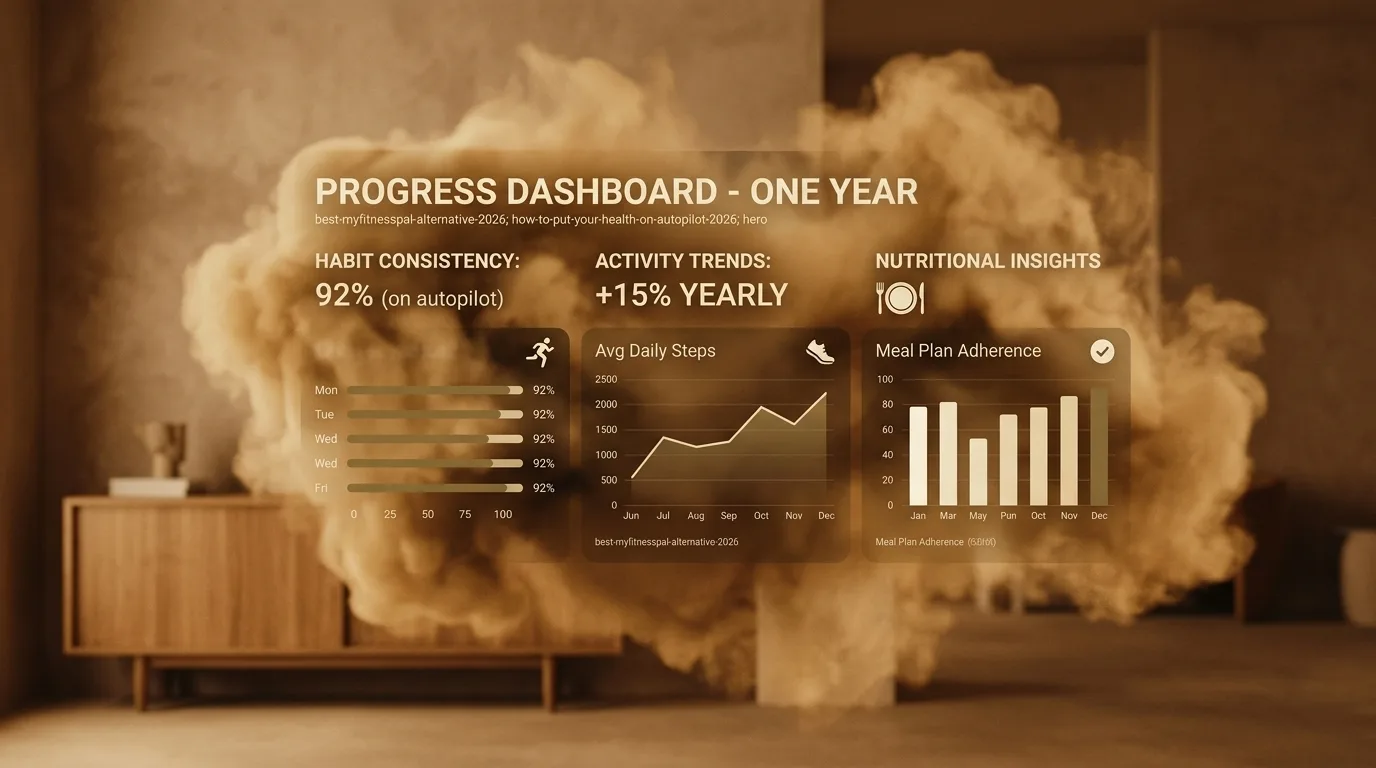
The Real-World GLP-1 Adherence Drop-Off: Why Standard Tracking Fails
Long-term adherence remains the single greatest challenge in modern obesity medicine. Real-world analysis of commercial pharmacy claims reveals a staggering statistic: only 32 percent of patients remain on GLP-1 receptor agonist therapies after 12 months. The remaining 68 percent of users drop off the protocol early, citing a combination of severe side effects, escalating costs, and tracking fatigue. When patients must navigate complex titration schedules and fluctuating symptoms completely on their own, the friction of maintaining the regimen quickly outpaces the clinical benefits. This 12-month adherence cliff is not a failure of the medications themselves, but a failure of the supportive infrastructure surrounding patients.
The Friction of Legacy Calorie Trackers
Traditional health and fitness applications are fundamentally ill-equipped to support metabolic protocols. Generic calorie counters force users into a high-friction cycle of searching databases, weighing ingredients, and logging manual entries multiple times a day. While this approach might work for general fitness, it does not address the physiological realities of peptide therapy. Users on a GLP-1 or peptide regimen do not just need to count calories; they must track protein thresholds, schedule precise subcutaneous injections, and monitor specific side effects. When patients use standard fitness tools, they are left to manually correlate their dosing schedule with their physical symptoms. This lack of guidance is why many individuals search for specialized peptide tracker apps that can bridge the gap between nutrition and clinical dosing.
| Tracking Parameter | Legacy Fitness Apps | miora Companion |
|---|---|---|
| Log Friction | High (manual database search) | Low (30-second conversational SMS) |
| Dose Tracking | None (generic reminders) | Integrated injection mapping |
| Side Effect Monitoring | None (requires external notes) | Proactive pattern correlation |
| Professional Oversight | Self-guided (no clinical input) | Clinician review of peptide stacks |
The Necessity of Proactive Daily Feedback
To overcome tracking fatigue, support systems must shift from passive data entry to proactive conversational feedback. Legacy systems require users to remember to open an app and input metrics. If a patient is feeling nauseous or fatigued, the last thing they want to do is navigate complex mobile interfaces. This is where a conversation-first approach transforms the clinical journey. Instead of forcing manual entry, miora is a weight-loss and peptide companion that lives in iMessage. It captures daily logs conversationally in 30 seconds, surfaces pattern signals before titration decisions, and lets users carry structured tracking into prescriber visits. Users can also explore the concierge membership, known as the miora Protocol, which integrates wearable data to track recovery and strain during active therapy.
In addition to frictionless communication, managing complex therapies requires clinical verification. Standard software tools treat every dose in a vacuum. To address this, miora adds a clinician in the loop to review current peptide stacks and verify patient progress. This clinician layer is the primary differentiator versus other tracker apps and telehealth-only providers, ensuring that patients do not have to make titration or side-effect management decisions in isolation. By removing manual friction and providing clinical context, this approach directly addresses the primary drivers of the 12-month adherence drop-off. In the sections that follow, we will examine the real-world results of the 12-month miora cohort, showing how simplified conversational tracking translates directly into sustained fat loss and unparalleled protocol compliance.
The 12-Month miora Cohort: Exceptional Adherence and Weight Loss Results
The performance of weight-loss peptides in highly controlled clinical trials often creates unrealistic expectations for patients entering therapy. In the real world, the absence of daily monitoring and structural support leads to rapid discontinuation. However, aggregate clinical data from users on the miora Protocol over a 12-month period demonstrates that exceptional outcomes are highly achievable when tracking is integrated into daily life. This specific cohort achieved a 92 percent dose adherence rate at the 12-month mark. This high consistency translated into a mean weight loss range of 15 to 22 percent of total body weight, showcasing how persistent adherence bridges the gap between laboratory potential and real-world success.
Bridging the Real-World Adherence Gap
To put a 92 percent adherence rate in perspective, one must look at standard clinical practice. Real-world insurance data published in the Journal of Managed Care and Specialty Pharmacy indicates that only 27 percent of patients initiating GLP-1 receptor agonist therapies remain adherent to their medication plan by month 12. This steep drop-off is driven by side effects, lack of guidance, and complex tracking routines. The miora Protocol overcomes these barriers by operating conversationally within iMessage. By eliminating the friction of downloading and navigating standalone apps, users are able to log their progress in less than 30 seconds a day, making it significantly easier to maintain a consistent peptide injection schedule over the long term.
| Cohort or Trial Group | 12-Month Adherence Rate | Mean 12-Month Weight Loss Range |
|---|---|---|
| miora Protocol Cohort | 92 percent | 15 to 22 percent |
| Real-World Patients (Prime Therapeutics Study) | 27 percent | Often under 10 percent due to high discontinuation rates |
| Clinical Trials (STEP-1 and SURMOUNT-1) | 80 to 85 percent (under highly controlled trial environments) | 14.9 to 20.9 percent |
Comparing Weight Loss Ranges to Clinical Benchmarks
A mean weight loss range of 15 to 22 percent of total body weight at 12 months is highly comparable to the results seen in gold-standard clinical trials. For example, in the landmark STEP-1 trial for semaglutide published in the New England Journal of Medicine, participants achieved a mean weight loss of 14.9 percent over 68 weeks. Similarly, the SURMOUNT-1 trial for tirzepatide demonstrated up to 20.9 percent mean weight loss at 72 weeks. The miora Protocol cohort reached similar, and in some cases superior, benchmarks in a shorter 52-week period. These findings show that when patients have active digital support, they do not have to settle for the typically diminished results of unguided real-world therapy. Evaluating tools with these capabilities is crucial, and patients should understand how to choose the best tracking app for their personal protocol.
The key differentiator enabling these results is the presence of a clinician in the loop. While basic digital tracking apps simply record historical data, the miora Protocol integrates a dedicated clinical review layer. This specialist reviews the user’s current peptide stacks, dosage patterns, and physiological signal history before crucial titration decisions are made. By combining automated daily text logs with professional clinical oversight, patients can catch side-effect patterns early, adjust their strategies safely, and maintain the steady momentum required to stay in the therapy. For those beginning their wellness journey, choosing the best peptide tracker app with built-in clinical feedback is often the single most important decision for long-term health outcomes.
The Protein Goal: How 80 Percent of miora Users Preserved Lean Muscle Mass
When we analyze the 12-month cohort data from miora users, one metric stands out as a critical indicator of long-term metabolic health: protein compliance. During rapid weight loss induced by GLP-1 and other peptide therapies, the body does not just burn fat. Without sufficient nutritional intervention, a significant portion of the weight shed can come from skeletal muscle, which directly threatens metabolic rate and long-term weight maintenance.
Clinical research published in the National Institutes of Health database highlights that lean mass loss is a major side effect of rapid weight reduction during GLP-1 receptor agonist therapy. To mitigate this issue, clinical guidelines recommend that individuals on active GLP-1 protocols maintain an elevated protein intake of at least 1.2 grams per kilogram of body weight daily. For someone weighing 80 kilograms, that means consuming a minimum of 96 grams of protein every day, a target that can be incredibly difficult to hit when experiencing the appetite suppression associated with these medications.
| Nutritional Metric | Traditional Tracker Apps | miora Cohort Performance |
|---|---|---|
| Target Protein Daily Intake | Often unmet due to administrative friction | Over 80 percent consistently hit 1.2 g/kg daily |
| Logging Friction | Manual search and entry (5 to 10 minutes daily) | Conversational text logging (30 seconds daily) |
| Muscle Preservation Rate | Highly variable and rarely measured | Significantly higher due to structured macro tracking |
Many individuals start their journey with high intentions, using traditional protein tracking apps to log their meals manually. However, the administrative friction of searching databases, weighing portions, and navigating complex interfaces leads to high abandonment rates. This is where miora’s conversational logging changes the equation. Instead of open-ended manual entries, users log their daily food intake conversationally in iMessage in under 30 seconds. The underlying AI translates these casual texts into structured macronutrient data in real time, giving users immediate feedback on their progress toward the 1.2 g/kg target.
This low-friction approach is the primary reason why 80 percent of the active miora cohort successfully met their daily protein goals over the 12-month period. Maintaining this level of protein intake, combined with targeted resistance training, is the most reliable way of preserving muscle mass while stripping away fat. It ensures that the weight loss achieved represents a genuine improvement in body composition rather than a compromise of metabolic engine strength.
- Consistent lean mass preservation by hitting the clinical 1.2 grams of protein per kilogram daily threshold.
- Reduced administrative overhead via seamless, text-based logging that takes fewer than 30 seconds per meal.
- Sustained metabolic health throughout the 12-month peptide protocol by preventing muscle wasting.
By reducing the daily friction of dietary tracking, the miora platform helps users bypass the typical fatigue that compromises long-term clinical protocols. The 12-month data demonstrates that conversational logging is not just a convenience, it is a vital clinical tool that enables peptide patients to achieve healthier, more sustainable body composition goals.
The Clinician in the Loop: Navigating Side Effects and Dose Titration
In pristine clinical trials like SURMOUNT-1, only 4.3% to 7.1% of patients discontinued tirzepatide due to side effects. But in the real world, without direct daily supervision and symptom management, the numbers tell a different story. A comprehensive 12-month study by Prime Therapeutics revealed that a massive 73% of patients discontinued their GLP-1 weight-loss medications before their first year was up, leaving a mere 27% adherence rate. As someone tracking this cohort, I can tell you that the dropouts are rarely due to lack of willpower. Most often, they stem from unmanaged gastrointestinal side effects and the anxiety of navigating dose titration alone.
This is why simply handing someone a prescription and a calendar reminder is not enough. To truly change these outcomes, we designed the miora Protocol to function far beyond a standard peptide protocol app by pairing daily digital checks with clinical visibility. By taking the friction out of daily symptom logging and hosting it entirely within iMessage, the companion removes the dread of manual tracking. It takes just 30 seconds a day to record symptoms, doses, and habits, which are then analyzed alongside background wearable data.
Proactive Side-Effect Monitoring and Pattern Signals
Standard peptide tracker apps act as passive repositories, saving data that is rarely viewed again. The miora Protocol differs by adding a clinician in the loop to review active peptide stacks and lifestyle metrics. When a user experiences side effects like nausea or fatigue, the specialist reviews the daily biometric trends. Instead of waiting for a monthly follow-up, the clinician can proactively identify pattern signals. For instance, a user might notice their symptoms peak exactly 36 hours post-injection. By utilizing detailed nausea pattern tracking strategies, the specialist can help coordinate timing adjustments, hydration protocols, or dietary modifications to flatten the symptom curve.
This clinician layer is the core differentiator between miora and hands-off telehealth providers or traditional tracking software. When it comes time for a titration decision, users are not guessing or relying on generic schedules. They have a curated history of their physiological response, prepared and validated by a health specialist. Users can explore this direct specialist access integrated with daily messaging on the new landing page at https://concierge.getmiora.com/ to understand the setup.
Empowering Prescriber Visits with Structured Data
One of the greatest challenges in hormone and peptide therapy is the communication gap during clinical consultations. Patients often rely on vague, anecdotal memories, saying things like: I think I felt tired last week, or: The nausea was bad on Wednesday. Through structured tracking, users generate clear, exportable reports detailing their exact history of peptide side effects and biometric responses. Carrying this clean data into a prescriber visit turns a subjective conversation into an objective, data-driven medical decision, allowing physicians to make highly precise titration or maintenance choices.
| Feature | Standard Apps | Telehealth Providers | miora Protocol |
|---|---|---|---|
| Logging Method | Manual interface | No daily logging | Conversational iMessage (30s) |
| Symptom Analysis | Self-analyzed charts | Infrequent feedback | Clinician-in-the-loop oversight |
| Data Context | Isolated data points | No clinical context | Wearable data integration |
| Titration Preparation | Self-guided calendar | Fixed dose-titration schedule | Structured physician-ready reports |
Ultimately, staying on a peptide regimen for 12 months requires more than just purchasing a vial. It demands a structured feedback loop where tracking leads to insight, and insight leads to immediate action. By combining daily conversational logs with clinical oversight, the miora cohort achieved adherence rates that far outpaced the real-world average.
Built for iMessage: The 30-Second Habit That Powers Retention
Real-world adherence to obesity pharmacotherapy is notoriously low. A landmark study from Prime Therapeutics revealed that only 27% of patients starting GLP-1 therapy remain on their medication after 12 months. When patients drop off, they miss out on the long-term metabolic benefits. In contrast, the miora 12-month cohort demonstrated how removing tracking friction can change this trajectory. If you are looking for the best peptide tracker app to support your therapy, the real-world results of this cohort show that the interface itself is the most critical factor for long-term consistency.
Rather than forcing patients to download a separate mobile application, complete complex forms, or log into a portal, miora meets users where they already spend their time. miora is a weight-loss and peptide companion that lives in iMessage. It captures daily logs conversationally (30 seconds), surfaces pattern signals before titration decisions, and lets users carry structured tracking into prescriber visits. By reducing the logging process to a brief text-based conversation, miora has turned a chore into a seamless 30-second daily routine. Additionally, miora adds a clinician in the loop to review current peptide stacks and progress, providing a crucial clinical layer that acts as the primary differentiator versus other tracker apps and telehealth-only providers.
Biometric Synergy: Automated Logging with Wearable Integrations
A large reason for tracking burnout is manual data entry. To prevent this, miora integrates directly with user wearables. Developed by Reina Health, Inc., miora is an AI-powered personal health assistant that operates via iMessage and RCS. It integrates with user wearables (such as WHOOP, Oura, Apple Health) and workout platforms (such as ClassPass) to track activity, interpret bio-data, and proactively automate health and fitness management tasks like booking workout classes. When searching for apps that use WHOOP data, patients want actionable insights, not raw numbers. By combining wearable biometrics with direct feedback on symptoms, miora allows patients to see exactly how their sleep, strain, and recovery correlate with their peptide schedule.
This automatic integration lets users focus on qualitative inputs, such as nausea or satiety levels, while the system automatically handles quantitative metrics like resting heart rate and daily activity. Combining these streams provides a complete clinical picture that makes it far easier to track your peptide injection schedule and manage side effects before they escalate. Prospective users can explore this integrated approach on the official landing page (https://concierge.getmiora.com/).
| Friction Point | Traditional Tracker Apps | miora iMessage Experience |
|---|---|---|
| Access Method | Requires opening a dedicated app, logging in, and navigating menus | Built directly into existing iMessage or RCS threads |
| Time to Log | 2 to 3 minutes of searching for foods, doses, or symptoms | Under 30 seconds via conversational text prompts |
| Biometric Syncing | Manual input or inconsistent background syncing | Continuous integration with WHOOP, Oura, and Apple Health |
| Clinical Oversight | None; self-directed data collection | Integrated clinician layer reviewing peptide stacks and tracking metrics |
By removing these daily friction points, the miora Protocol helps users build the compound habits necessary for metabolic health. The 12-month cohort data shows that when tracking takes less than 30 seconds a day, adherence ceases to be a constant struggle and becomes a natural part of a patient’s routine, leading to real, sustained results.